
How Intelligent Modeling Enhances Proactive Facility Management
In today’s fast-paced industrial environment, environmental control has become a critical necessity—especially in sectors like pharmaceuticals, food storage, logistics, laboratories, and cold chain operations. Temperature stability determines product quality, safety, and regulatory compliance. Traditionally, facilities relied on periodic assessments, but with the rise of Artificial Intelligence (AI) and predictive analytics, the landscape has changed dramatically. Across Saudi Arabia, particularly in Jeddah, Dammam, and Riyadh, organizations are increasingly adopting advanced temperature mapping study techniques integrated with AI to ensure precise environmental control and proactive decision-making.
Companies like Redlines, a leading provider of temperature mapping services in the Kingdom, are driving this transformation by integrating smart modeling, real-time analysis, and predictive forecasting. (Website: www.Redlines.sa)
The Evolution of Temperature Mapping Studies with AI
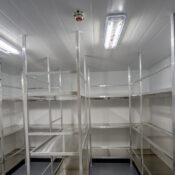
A temperature mapping study has always been essential for evaluating temperature distribution within storage areas, warehouses, cold rooms, freezers, vehicles, and laboratories. Traditionally, it focused on collecting historical data through sensors placed across critical points. While effective, this method had a major limitation: it provided insights only after issues occurred.
With AI-driven analytics, this process is no longer reactive—it is predictive.
Machine learning algorithms can analyze thousands of temperature data points, identify behavior patterns, and forecast environmental variations before they affect stored products. This capability is especially crucial in Saudi Arabia, where extreme heat can put pressure on facility HVAC systems, leading to unexpected temperature fluctuations.

How AI Enhances Temperature Mapping Study Efficiency
1. Predicting Temperature Deviations Before They Occur
AI models evaluate historical temperature mapping study data and real-time sensor inputs to predict potential hotspots, cold zones, or environmental drifts.
Instead of discovering issues after product damage, facility managers can take early action.
2. Improving HVAC System Performance
In regions like Riyadh, where outside temperatures can exceed 45°C, HVAC systems must operate at maximum efficiency.
AI identifies patterns of system strain and recommends adjustments to avoid failures, reducing energy costs and improving stability.
3. Enhancing Cold Chain Reliability Across Saudi Arabia
The Kingdom’s vast distribution network—from Dammam ports to Jeddah warehouses—requires uninterrupted cooling for pharmaceuticals, frozen goods, and food items.
AI-powered temperature mapping studies help detect risks along transport routes, including momentary temperature spikes inside refrigerated vehicles.
4. Automating Compliance and Reporting
Regulatory bodies demand consistent documentation and proof of environmental stability.
AI platforms automatically compile temperature mapping study data, generate compliance-ready reports, and alert teams instantly if deviations occur.
5. Optimizing Facility Layout and Airflow
Predictive analytics can simulate how airflow behaves under different operational conditions.
This helps engineers redesign storage layouts, reposition sensors, or adjust equipment placement to achieve uniform temperature distribution.
Industry Applications Across Saudi Arabia
Pharmaceutical Storage
Riyadh’s expanding pharmaceutical sector relies heavily on advanced mapping to ensure drug potency. AI systems can detect micro-variations that affect sensitive medicines.
Food & Beverage Distribution
Cold rooms in Jeddah and Dammam benefit from predictive mapping that minimizes spoilage during peak summer months.
Laboratories & Research Centers
AI ensures that laboratory environments remain stable during experiments, especially in biotech and healthcare facilities requiring strict control.
Large Warehouses & Logistics Hubs
Organizations use AI-driven mapping studies to plan storage zones, anticipate risks, and implement proactive environmental adjustments.
Redlines: Leading the AI-Powered Temperature Mapping Revolution
Redlines provides advanced temperature mapping study services across Saudi Arabia, serving clients in Jeddah, Dammam, Riyadh, and beyond.
By integrating AI, IoT sensors, and predictive modeling tools, Redlines delivers:
- Real-time environmental monitoring
- Accurate risk forecasts
- Automated reports for audits and compliance
- Optimized HVAC and storage performance
- Tailored solutions for cold chain, pharmaceuticals, and warehousing
With expertise backed by technology and industry standards, Redlines ensures that facilities operate with confidence and precision—no matter how harsh the external climate becomes.
Explore more at www.Redlines.sa
Conclusion
AI and predictive analytics are transforming how organizations conduct temperature mapping studies across Saudi Arabia. Instead of reacting to failures, businesses can now predict them, prevent them, and maintain complete control over their storage environments.
With leaders like Redlines providing cutting-edge temperature mapping services in Jeddah, Dammam, Riyadh, and across the Kingdom, facility management is entering a smarter, safer, and more proactive era.