Modern facilities across Saudi Arabia rely on controlled indoor environments to protect sensitive products, ensure regulatory compliance, and maintain operational efficiency. However, even well-designed buildings can contain hidden risk zones where temperature deviations frequently occur. A comprehensive temperature mapping study is the most reliable way to identify these vulnerable areas and implement effective control measures.
At Redlines, we provide professional temperature mapping study services across Saudi Arabia, including Jeddah, Dammam, and Riyadh. Our studies help organizations uncover temperature risks before they lead to product loss or compliance issues. Visit www.Redlines.sa to learn more.
1. Loading and Unloading Bays
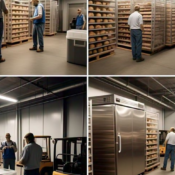
Loading docks are among the highest-risk zones in any facility. Frequent door openings allow external heat and humidity to enter, especially during peak summer conditions. A temperature mapping study clearly shows how temperature spikes occur near loading bays and how long it takes for conditions to stabilize.
Mapping data supports the installation of air curtains, rapid doors, and improved dock seals to minimize temperature excursions.
2. Areas Near External Walls and Roofs
In Saudi Arabia’s extreme climate, external walls and roofing absorb significant heat throughout the day. These structural elements often transfer heat into internal spaces, creating localized hot zones.
A detailed temperature mapping study identifies temperature gradients near walls and ceilings, allowing facility managers to improve insulation and cooling strategies.
3. Upper Racking and High-Ceiling Zones
Facilities with high ceilings commonly experience vertical temperature stratification. Warmer air rises, exposing products stored on upper racks to higher temperatures.
Through a temperature mapping study, sensors placed at multiple heights reveal these variations, ensuring products remain within approved temperature limits regardless of storage level.
4. HVAC Supply and Return Air Zones
Ironically, areas close to HVAC supply and return vents can experience temperature instability due to excessive airflow or short cycling. These fluctuations may go unnoticed without a temperature mapping study.
Mapping results help balance airflow and optimize diffuser placement to maintain consistent temperatures across the facility.
5. Equipment-Adjacent Zones
Machinery such as refrigeration units, compressors, lighting systems, and IT equipment generate localized heat. These areas often become unnoticed hot spots.
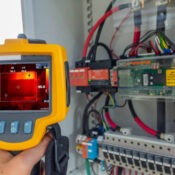
A professional temperature mapping study highlights heat buildup around equipment, enabling improved ventilation or strategic equipment relocation.
6. Cold Rooms and Controlled Storage Areas
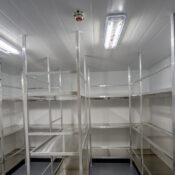
Cold rooms are expected to be stable, yet they frequently contain hidden hot and cold zones due to airflow obstructions or door activity. A temperature mapping study verifies that cold rooms meet required conditions under real operating scenarios.
This is especially critical for pharmaceutical, food, and laboratory facilities in Riyadh, Jeddah, and Dammam.
7. Transition Zones Between Temperature Areas
Transition spaces such as corridors connecting cold and ambient zones often experience temperature fluctuations. Without proper control, these zones can affect nearby storage areas.
A temperature mapping study identifies thermal leakage in transition zones and supports corrective measures such as improved sealing or airflow separation.
8. Power Failure Recovery Zones
After power interruptions, certain facility zones recover temperature more slowly than others. These delayed recovery areas pose a serious risk to temperature-sensitive products.
By conducting a temperature mapping study, facilities can understand recovery patterns and improve contingency planning, backup power systems, and response procedures.
Why Temperature Mapping Studies Are Essential in Saudi Arabia
Saudi Arabia’s climate places constant stress on building environments. A temperature mapping study provides data-driven insight into how facilities perform under real-world conditions, not just design assumptions.
Facilities across Saudi Arabia, Jeddah, Dammam, and Riyadh rely on temperature mapping studies to reduce risk, improve HVAC efficiency, and maintain compliance with regulatory and quality standards.
Redlines: Experts in Temperature Mapping Across Saudi Arabia
Redlines specializes in delivering accurate, compliant, and actionable temperature mapping study services tailored to Saudi building environments. Our experienced teams operate in Riyadh, Jeddah, and Dammam, using calibrated instruments and industry best practices.
By partnering with Redlines, organizations gain clear visibility into high-risk facility zones and the confidence that their environments remain under control.
Visit www.Redlines.sa to schedule your professional temperature mapping study and safeguard your facility across Saudi Arabia.