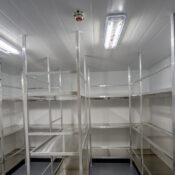

Warehouses operating in Riyadh face some of the most extreme environmental challenges in the region. With summer temperatures often exceeding 45°C, maintaining stable internal conditions is critical—especially for pharmaceuticals, food products, chemicals, and other temperature-sensitive goods. A well-planned temperature mapping study is essential for identifying and managing heat-related risks. At Redlines, we provide professional temperature mapping study services across Saudi Arabia, including Jeddah, Dammam, and Riyadh. Learn more at www.Redlines.sa.
Below are the seven major heat-driven obstacles that every Riyadh warehouse must overcome through an effective temperature mapping study.
1. Extreme External Heat Infiltration
The intense outdoor heat in Riyadh places enormous pressure on warehouse structures. Walls, roofs, and loading bays absorb heat throughout the day, leading to internal temperature spikes. A temperature mapping study helps identify areas where heat infiltration is highest, allowing operators to improve insulation and sealing before products are affected.
2. Uneven Airflow Distribution
Large warehouses often suffer from poor airflow, creating hot zones and cold zones. High ceilings and dense racking can disrupt air circulation. Through a comprehensive temperature mapping study, airflow inefficiencies become visible, enabling adjustments in HVAC layout, fan positioning, and racking design to ensure uniform cooling.
3. HVAC System Overload During Peak Summer
In Riyadh’s peak summer months, HVAC systems operate under extreme load. Even high-capacity systems may struggle to maintain consistent temperatures. A temperature mapping study evaluates HVAC performance under real operating conditions, confirming whether the system can sustain required temperatures during peak heat hours.

4. Heat Exposure at Loading and Unloading Areas
Frequent door openings during loading and unloading allow hot air to enter the warehouse. This is a common issue across logistics facilities in Saudi Arabia, including Jeddah and Dammam. A targeted temperature mapping study identifies temperature recovery times and high-risk zones near docks, helping facilities implement air curtains, rapid doors, or buffer zones.
5. Vertical Temperature Stratification
In tall warehouses, warm air rises, creating higher temperatures near the ceiling while lower levels remain cooler. This stratification can compromise stored goods at upper rack levels. A temperature mapping study captures temperature variations at different heights, ensuring products remain within safe limits throughout the storage area.
6. Equipment-Generated Heat
Material handling equipment, lighting systems, and refrigeration units can generate localized heat. Without a temperature mapping study, these heat sources may go unnoticed. Mapping helps detect equipment-related hot spots and guides decisions on equipment placement, ventilation improvements, and energy-efficient upgrades.
7. Limited Real-Time Visibility of Temperature Risks
Many warehouses rely on a small number of sensors, which fail to capture true temperature behavior. A full temperature mapping study provides a complete thermal profile of the warehouse, offering accurate data for compliance, audits, and risk management. This is especially important for regulated industries operating in Riyadh and across Saudi Arabia.
How Redlines Helps Riyadh Warehouses Overcome These Challenges
Redlines specializes in conducting professional temperature mapping studies tailored to the harsh climate of Saudi Arabia. Our experienced team uses calibrated data loggers, strategic sensor placement, and industry-standard methodologies to deliver accurate and reliable results.
We proudly provide temperature mapping services in Riyadh, Jeddah, and Dammam, supporting warehouses in pharmaceuticals, food storage, cold chain logistics, and industrial sectors. Our studies help businesses improve temperature control, reduce product loss, enhance HVAC efficiency, and meet regulatory requirements.
Conclusion
Riyadh warehouses face unique, heat-driven challenges that demand proactive solutions. By addressing these seven obstacles through a comprehensive temperature mapping study, facilities can protect product integrity, maintain compliance, and optimize operational efficiency—even in extreme Saudi heat.
For expert temperature mapping study services across Saudi Arabia, including Jeddah, Dammam, and Riyadh, trust Redlines.
Visit www.Redlines.sa to learn more or schedule your study.